
This Week in Bridge (TWiB) By Level & Category
This page is designed to help you develop your bridge in a systematic fashion. We have categorized bridge topics by level and taken our weekly email lessons, This Week in Bridge (TWiB), and given recommendations of what to read for each subject area and level. The idea is to provide you with a group of topics to learn together that are of approximately the same difficulty and that relate to each other. This should allow for students to have some control over their bridge development and progress. We have also given a recommended reading order for the TWiB documents within each group and level, taking into consideration difficulty and importance of topic.
Please feel free to contact us with questions if something is unclear, to report typos or errors, to suggest missing topics, or to get further information about becoming a bridge student with AiB. Detailed system descriptions and digital copies of ACBL convention cards for each Bridge Level are available on the Upgrade Your Bidding System page.
Background Material and Robert's Bidding Lessons Books
Some background knowledge is assumed in before the Basic 2/1 Game Forcing in the AiB curriculum.
Many of these background topics are covered in the Robert's Bidding Basics Document (for learning bridge from scratch). For reference, this document is referred to as TWiB 0.
The Collections of TWiB for each level are available as Robert's Bidding Lessons.

Robert's bidding lessons (2nd Edition) Books are now Available!
Robert's Bidding Lessons are now available for purchase. These are collections of TWiBs for each level organized by topic and in a recommended reading order. They are available in published in large size (8.5" x 11"). See the Books page if you wish to place an order.
Level 1 - Basic 2/1 Game Forcing and Other Agreements
See above images for suggested order for reading Level 1 TWiB documents.
Detailed list of Level 1 TWiB readings by category:
Bidding Concepts

We finish off our discussion of visualizing the opponents' hands with some examples that explore how to play the hand during the auction.

When listening the opponents' auction it is important to visualize both of the opponents' hands in order to defend the hand best. Here we focus on what Responder's hand looks like and how to make use of that information.

Thinking about what we know about the Opener's shape and strength helps us better defend the hand. Here we look at what we need to consider and ask the opponent's in order to understand what their bidding shows.

This week we begin our month of looking at how to interpret the auction, by discussing listening to the opponents' bidding.





Notrump Fundamentals


2/1 Game Forcing
Fits & Hand Evaluation
This week we close out our hand evaluation collection by looking at a method for evaluating highly distributional hands: Losing Trick Count. Specifically, we focus on Losers and Covers.

This week we look at how fitting honors improve the playing strength of a hand and how wasted values make it extremely difficult for our side to get rid of our losers.
This week we look at how having a double fit or having a misfit affects our hand evaluation.

This week we look at the power of a trump fit and see how the size of that fit affects our hand’s ability to take tricks. We focus on the Law of Total Tricks - when it works and when it needs adjusting.

Here we look at how we evaluate our hand and keep re-evaluating as the auction continues.
Here we continue our hand re-evaluation process by looking at how we make use of information about the opponents’ hands.


When we are evaluating our hand we focus on the way that our hand fits together with partner's. Not just fits (as in the size of our fits) but also on our fitting cards. The way our HCP fit together with partners suits and HCP is another important factor in properly evaluating our hand.
After an active July where we worked on Hand Evaluation (primarily focusing on HCP and re-evaluation) we are continuing our Hand Evaluation discussion in August. But this month we are moving in a different direction. The goal for this month is to help us understand the value of fit (trumps) and how it help us produce tricks!

Constructive Bidding

When Interferer jumps to 4-Major it can make our life very difficult. The only way we can survive such auctions is to be prepared for them and know what our options are. This week we take a look at what Responder can do and how we can survive the auction!
Competitive Bidding

When the opponents open at the 3-level or 4-level they put a lot of pressure on us to make difficult decisions without much room to maneuver or describe our hand. This preempt will force us to either double or overcall at a very high level – we will not have many of the options that are available to us at lower levels. Let’s look at each of these options and see how we need to adjust our thinking and bidding because of the lack of space and options available to us.



Here we look at what we show when we make NT overcalls in a variety of different situations.


Here we look at our bidding options and considerations when LHO opens the bidding and RHO responds - Bidding in the Sandwich Seat.

This week we look at overcalls at the 2-level, some of the most abused bids in all of bridge.
This week we look at one of Responder’s most valuable bidding tools, the Negative Double.

We now take a look at how we can attack the opponents by using Preemptive Jump Overcalls at the 3-level and higher.
Overcalls don’t just happen in suits - we can overcall NT as well. Here we look at NT overcalls in a variety of situations.

Making an overcall in the balancing seat is slightly different than in the direct seat. Here we look at our different options and goals.
Bidding between two bidding opponents can be scary. We look at what we should consider when bidding in this “Sandwich Seat”.

2-Level Jump Overcalls are a powerful competitive bidding tool. Here we look at how to use them when RHO has opened the bidding.

2-Level Simple Overcalls promise both a better suit and a better hand than 1-level overcalls. Here we look at what exactly is needed to take this action.

Overcalls are an important part of competitive bidding. 1-level overcalls of 1D, 1H, and 1S are common actions and it is important that we know what we are showing when we make these bids.

The Negative Double is probably the most useful convention in bridge. Certainly in competitive auctions. Here we overview what Responder promises by making a Negative Double after a variety of different overcalls.

What we need in order to Overcall at each level of the bidding varies. We examine each of these bidding situations and how our options lessen as the bidding level increases!




Other Bidding Topics
Here we look at weighing our options for balancing after an opening bid by LHO when we have a distributional hand.
Play of the Hand
This week we look at the core methods of developing winners - Promotion, Length, and Finesse.
The trump suit can be used for more than just removing the opponents’ trump or keeping control of the hand. Here we look at another value of the trump suit, transportation!

As Declarer we have many tools for helping us take more tricks. A “Hold Up Play” is a valuable one of these tools, especially in Notrump contracts. Here we look at some positions where it is best to choose not win the first trick.

Establishing a long and relatively weak suit in dummy is usually done by ruffing the suit out. We look at how best accomplish this!

In suit contracts, shortness in the dummy is extremely valuable. Here we look at how to best make use of dummy's short suit.

Playing a suit contract requires some skills for how to get rid of our losers in that suit. We look at how to play suits that are equal in length in both dummy and declarer's hand.

When we can ruff our losers in the short trump side we produce extra tricks for ourselves. Let's see how we evaluate our hand when we have these ruffing values.

Trump fit is extremely important. We look at how the size and type of trump fit we have affects our play options!

Suit Contracts play differently than Notrump Contracts. Specifically, in most suit contracts we are in control of the hand, because we have a trump suit. This allows us to count our losers instead of worrying about our more immediate winners. This week, we begin our discussion of suit contracts by taking a look at how this works in more detail.
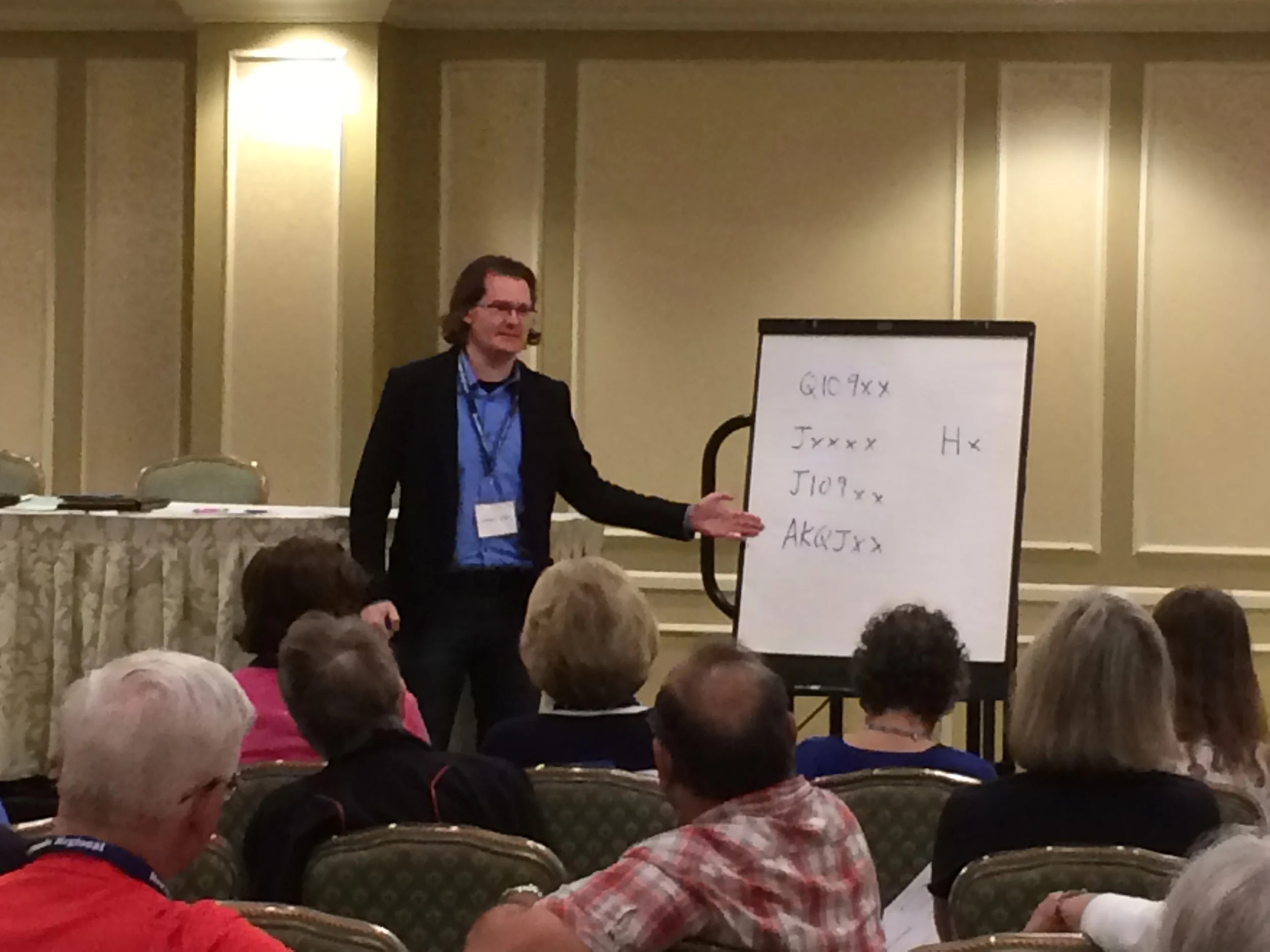
Taking a Finesse is a simple skill, but it is one that we must understand and master in order to effectively declare a hand. We look at finesses from basic to complex and see how this skill helps us learn to take more tricks as Declarer.
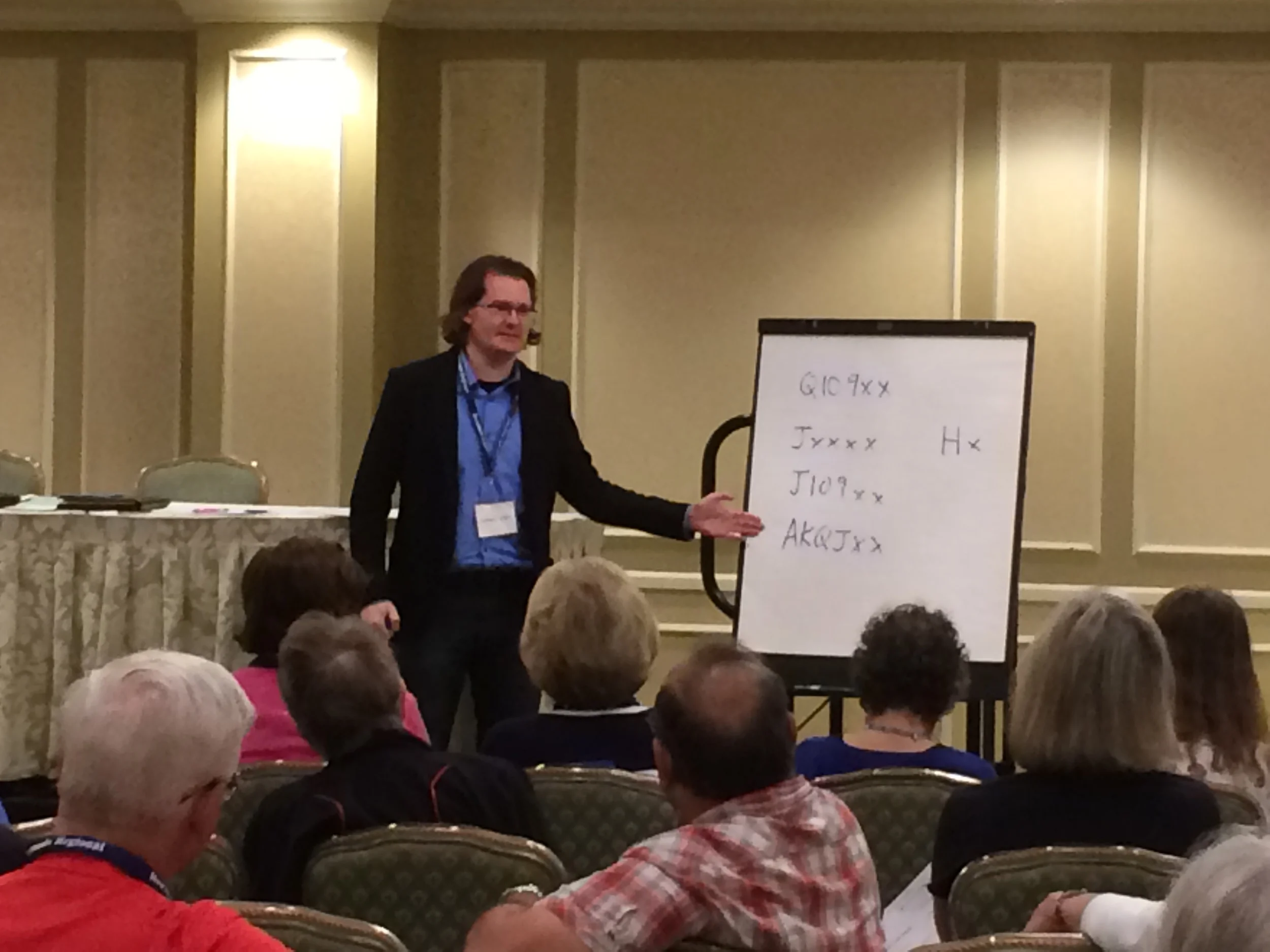
In order to efficiently take our winners when declaring we need to play a suit properly. One of the important skills in doing so is to Unblock the honors in the suit. Here we take a look at how this works and why it is important.
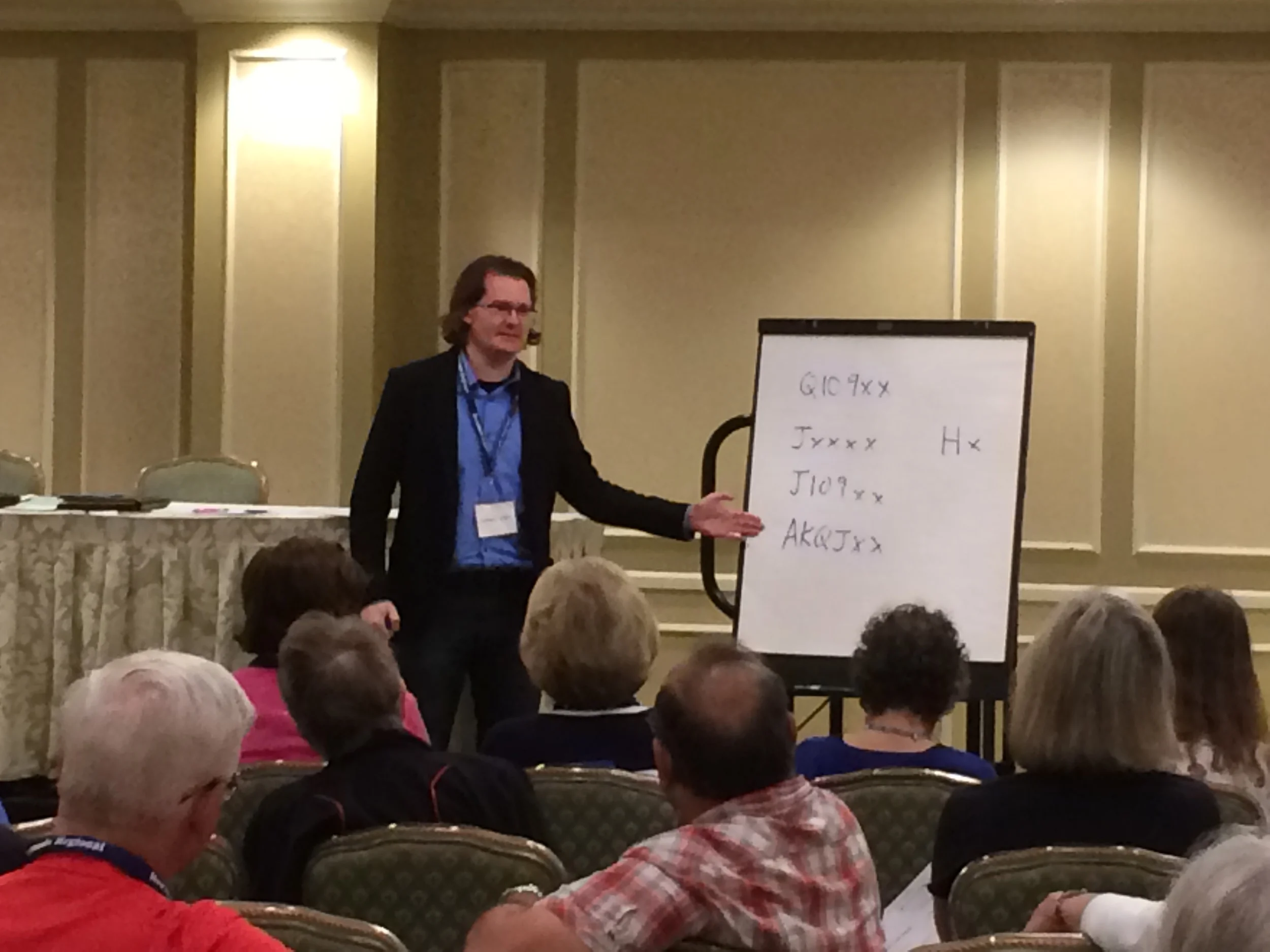
Making a Plan is the most important part of Declarer play. This month we turn our focus to Declarer play and specifically Notrump Contracts. We'll begin by examining what is involved with making this plan and focus on our most fundamental of ideas - Counting Winners!
Defense
We often lead a new suit in the middle of defending a hand. Here we discuss how to do that and how partner should interpret the card that we play.

The month we continue our defense discussion. This week we focus on Partnership Defense Philosophies. These are important generic understandings to have with partner about the way we defend a hand!
This week our focus is on Defensive Tools in the middle of the hand. Our goal is to familiarize ourselves with the options available on a given hand and then learn to make good choices of how to attack the Declarer.
Level 2 - Intermediate 2/1 Game Forcing
See above images for suggested order for reading Level 2 TWiB documents.
Detailed list of Level 2 TWiB readings by category:
Bidding Concepts

Some of partner's bids are corrective, hoping to end the auction. Other bids are forward-going, hoping to reach game or more. Here we look at some examples to help us avoid mix-ups with partner in these auctions.

Evaluating your cards and determining whether to bid on or not is difficult. Understanding if your hand is generally offensively- or defensively-oriented requires thinking about your hand differently. Here we look at how to do that.
This week we begin our month of looking at how to interpret the auction, by discussing listening to the opponents' bidding.
Doubles of artificial bids are very useful to help partner make better opening leads. Here we look at lead-directing doubles!
This week we focus on the different ways we can make use of a cuebid of the opponent's suit.

This week's lesson is on the Optimistic Minimum, a valuable concept in slam and game bidding!
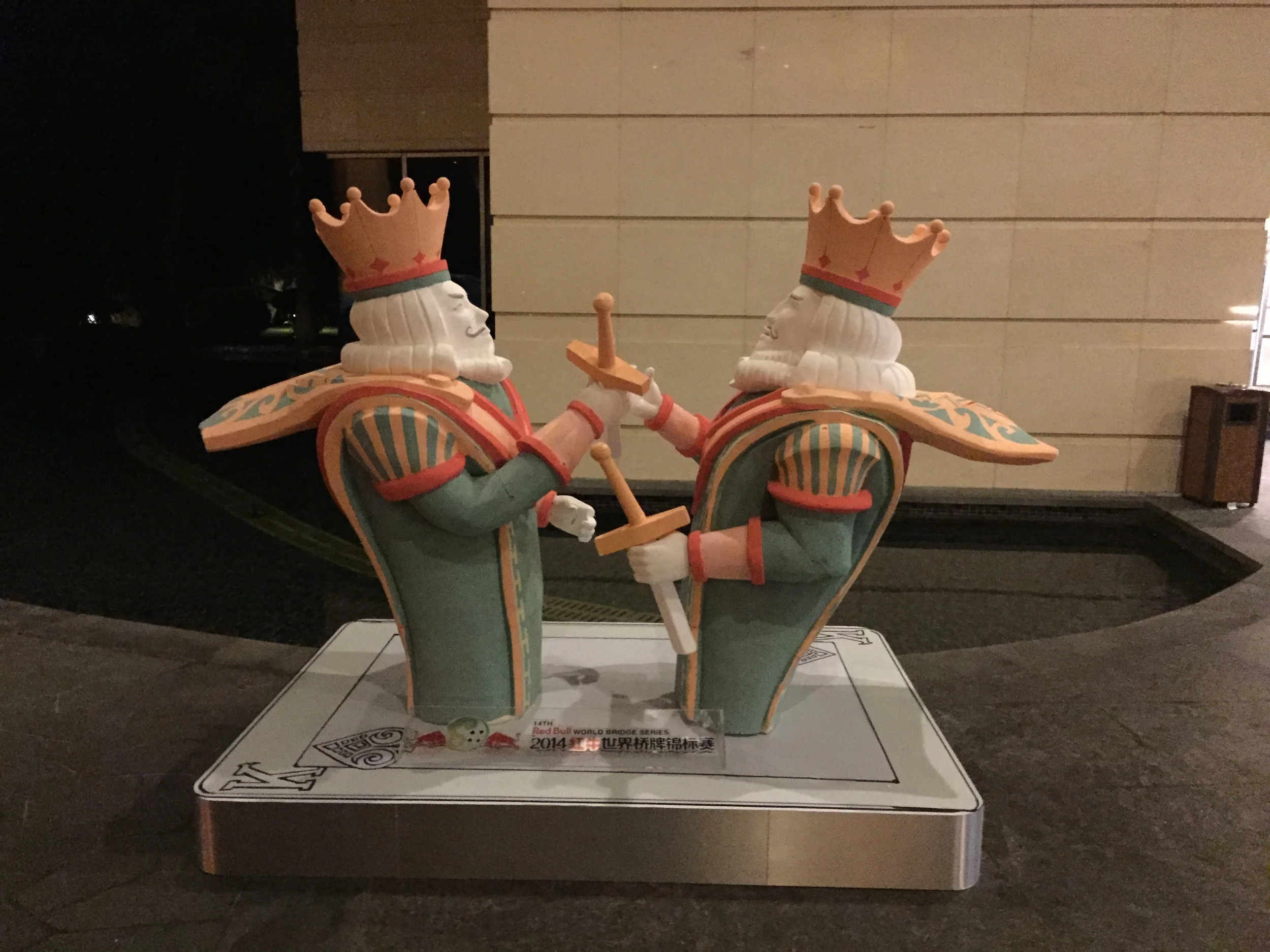
Photo of Sanya, China site of the 2014 World Championships!

Planning ahead is important in almost every auction. When we open in 3rd and 4th seat partner has some different tools available to them. We want to be prepared for how the auction might go. Making a plan in this specific auction will keep things from getting out of hand.

Just as it is important for the Opener to make a plan before they open the bidding it is also important for the Responder to make a plan before they respond to the Opener. Thinking ahead about what you want to communicate, what you expect from partner, and how the opponent's might make life difficult can greatly help our constructive bidding.

Making a plan for how the auction is likely to go is very important. This week, we look at what the Opener should be thinking about and how they should plan their rebid before they even start the auction.

This month's focus for the OLS is planning ahead and thinking about "What to Expect." But before getting to the details of this planning, we want to focus on an equally important topic, that of who is in charge during the auction. This is the principle of Captaincy!
Notrump Fundamentals
Fits & Hand Evaluation

Here we look at how to re-evaluate our hand after partner has preempted the bidding in front of us.
This week we look at New Minor Forcing and the fundamentals of how Responder finds out more information about Opener's hand on the second round of the bidding.
We round out our discussion of finding fit with Responder by looking at Responder's tool for finding fits (forcing the auction) after the Opener has shown an Unbalanced Hand - 4th Suit Game Forcing! We will see its traditional use of looking for a 5-3 fit for game, as well as using it to allow us to explore for slam.
This week we examine Responder's tool for finding 5-3 fits when Opener shows a balanced hand - New Minor Forcing. We also look at some alternate uses for NMF!
This week we focus on Responder's rebids and the how they must look for a fit while showing their strength and their length.
When the opponents compete in our auction it becomes even more important to find our fit quickly. This week we look at the ways we raise Responder in these competitive auctions!
This month we turn our focus again to finding fits. Specifically we will discuss how to find fits in Responder's suit. Let's start of this topic by looking the different options Opener has to Raise Responder!


Constructive Bidding

As Responder we can use a negative double with a variety of different hand shapes and strengths. Here we look at how we use our rebid to clarify to partner what type of negative double we made.

Here we look at how to respond to partner’s 3-level preempt when they have taken away all our bidding space.

Here we look at how Responder bids with a variety of different Major suit shapes and strengths.

Having good agreements about the meaning of bids at the 1-, 2-, and 4-level are common. Here we look at how to make use of the 3-level in a variety of different auctions.


This week we examine a simple auction that can lead to many bidding mix-ups: 1C - 1D - 1H - 1S*!
Competitive Bidding
When the opponents open at the 3-level or 4-level they put a lot of pressure on us to make difficult decisions without much room to maneuver or describe our hand. This preempt will force us to either double or overcall at a very high level – we will not have many of the options that are available to us at lower levels. Let’s look at each of these options and see how we need to adjust our thinking and bidding because of the lack of space and options available to us.
Here we look at our bidding options and considerations when LHO opens the bidding and RHO responds - Bidding in the Sandwich Seat.
In a competitive auction, Responder will often have a choice between making a Positive Freebid or a Negative Double. Here we look at how to choose between the two options.

Welcome back and Happy New Year! This week we look at when it is a good idea to pass, even if we hold the values of an opening hand.

Here we look at what double means in a variety of situations on the second round of the bidding.
This week we look at one of Responder’s most valuable bidding tools, the Negative Double.

When an opponent doubles our control-showing cuebid, we need to know how to proceed with the auction.

When partner makes a Jacoby transfer and the opponents overcall, we need to know how to deal with this interference!


Here we look an important topic, especially for competitive bidding: a variety of ways to raise partner. We focus on accomplishing this early in the auction!
Bidding between two bidding opponents can be scary. We look at what we should consider when bidding in this “Sandwich Seat”.
When Partner makes a Responsive Double after we have made an overcall, we are forced to take another call. We look at how we use this call to describe our shape and strength to Partner.

When partner makes a Negative Double, it often puts us in a difficult rebid situation -- especially at high levels. Here we look at how to handle some of these complicated rebid situations.
This week we attempt to answer a basic question: What is a Stopper? We'll see how we can use this information to help us know when to bid Notrump.

Showing a Limit Raise as a Passed Hand can be tricky. This week we look at how our thinking (and Partner's) shifts when we are a Passed Hand showing a fit.

Balancing is a difficult part of bridge. Balancing as the Responder (when we don't have too many values) is even more difficult. We look at these positions and make sure Responder has a good tools to compete in the bidding!

When partner preempts at a high level and we are the one with a good hand we are forced with an even more difficult decision than when they opened a weak two bid. This week we look and how to handle these challenging situations...

Other Bidding Topics
Balancing can be done in many different low-level auctions. We look at some options by Opener, Responder, and Interferer.
Play Of The Hand
When it comes to taking tricks, immediate winners are our starting point. Then come the winners that we can develop using Promotion, Length, or Finesse. Here we look in detail at the technique of finesse. A finesse is an act of taking a trick in a suit with a card that is not the “master” card in that suit. We do this by taking advantage of the location of the card that is higher-ranking (by finessing against it). A finesse usually requires a tenace of honors that allows us take advantage of a favorably located honor of the opponents (a holding like AQ with the King in front of it). There are other kinds of finesses as well. Let’s look at this method in detail.

When we declare a hand in a suit contact, we usually look at our number of losers. We start by counting our certain losers (the ones we know we cannot avoid), then estimate our potential losers, and make a plan for trying to get rid of as many of our potential losers as possible. We start by approximating our losers from the long trump side (which is frequently declarer’s hand). When we have potential losers in a side suit, one of the ways that we can get rid of these losers is by trumping them with the short side’s trump. Ruffing losers in the short side is a useful declarer play technique and one we need to make sure to make use whenever possible.
The most valuable cards on many hands are not the high cards but the other cards that threaten to become winners. Here we look at how to make us of these Threat Cards effectively.

Here we look at how to take the information we gain from counting one particular suit and combine it with other information to help us judge what is going on with the entire hand.

Learning to count a suit is extremely important. Here we look at how to do so in the way that is most efficient and helpful to us!

This week we look at how to use the trump in partner’s hand to help us take a finesse in another suit. This ruffing finesse is a useful line of play when you think you know where a missing honor is located!
Ruffing in the long hand is often a bad thing. But if we do this bad thing enough, it can turn into a good thing by allowing us to turn the short side into a long side. Here we look at this dummy reversal line of play.

Managing the trump suit and getting every value you can out of it is an important skill to master in order to improve your Declarer play!

Why choose between a finesse and a suit splitting? Find a way to try both — combining your chances is the key to better Declarer play and here we look at how to do it!

Here we look at how psychology is an important part of declarer play. Part of this is knowing when to be expect good things to happen and when to spend your mental energy worrying about bad breaks!
As Declarer we have many tools for helping us take more tricks. A “Hold Up Play” is a valuable one of these tools, especially in Notrump contracts. Here we look at some positions where it is best to choose not win the first trick.

Length in dummy can be valuable if we ruff out the suit, but length and strength in dummy can used in a variety of ways to produce extra winners.

This month we look at some Declarer play tools that are effective in Notrump contracts. We begin by examining the concept of the danger hand (and the safe hand) and look at how to make us of this to make our best declarer play choices.
In all contracts, but especially in Notrump, developing a long suit into winners is a highly effective way to make our contract. We will look at these options and compare them to establishing tricks the old fashioned way (with our High Cards) and see how we can combine these two skills to improve our play.
Defense
When you can ruff one of Declarer’s tricks it is extremely satisfying. Here we work on techniques that will allow us to do so as often as possible!

Here we look at defensive situations in the middle of the hand - we start with a look at covering the opponent's honors -- which one to cover?
Attitude signals are some of the most important ways that we can communicate with our partner. Here we look at how to make them and when they apply so that we can work with partners effectively!

This week we look at what our thinking is when we make an opening lead into a low level contract where declarer has shown a minimum opening hand.
Here we look at how our opening leads change when we are leading into a preemptive opening bid.


As a defender we want to give declarer as many guesses as possible. Here we look at how to force declarer to one of the more difficult guesses, the Ace/Queen guess!

We look at a variety of suits to attack and try to understand when breaking a new suit is safe and when it is dangerous!

Here we look at how to learn to recognize danger and use that to determine how best to defend a contract.

Returning partner's lead is the normal thing to do when you gain the lead in 3rd hand, but it is not always the best action. We look at when to return partner's lead and when to shift to another suit.
When partner leads a singleton it is important for partnership morale to give them their ruff (if possible). Use every tool you can: Attitude, Suit Preference, and even Trump Suit Preference signals to try to get these situations right!

Assuming declarer is logical in their play can help us determine what declarer holds and help us best defend the hand!
Most bridge players are well trained to make a plan about winners or losers as declarer, but we should be making a similar plan when we are defending!

This week we turn our discussion to a common and important part of Defense -- Leads in Partner's Suit. We will focus on the details of these specific situations.
Level 3 - Modern 2/1 Game Forcing
See above images for suggested order for reading Level 3 TWiB documents.
Detailed list of Level 3 TWiB readings by category:
Bidding Concepts

There are two very different approaches to jumps in Forcing Auctions. We examine the Fast Arrival vs. Picture bids -- what kind of hands are easier to bid with each method?
Notrump Fundamentals

Once we learn the core techniques of NT declarer play, promotion, length, and finesse, then we need to develop the skills of implementing each of them to take tricks when they come up at the table. But unfortunately, declarer play is not always as simple as finding one of these techniques and putting it to use. Sometimes we have multiple techniques to choose from, and we need to construct a line of play that is going to be successful. Let’s look at how each of these works.
When we declare in a notrump contract, we need to produce winners. We begin by counting our immediate winners, cards like Aces and Ace-Kings, that can be used to take a sure trick. We then turn our focus to how we can develop other cards into winners, called potential winners. The traditional methods for developing winners are Promotion, Length, and Finesse. These techniques are not certain to produce winners, but they give us a chance of producing additional tricks if lucky things happen for us. Here we look at each of these methods in detail to help us understand our options and determine when to make use of the different trick development techniques.
2/1 Game Forcing
2 Over 1 Game Forcing (2/1 GF) bids are the core of a modern approach to bidding. The primary idea is that when partner opens at the 1-level and we bid a new suit at the 2-level (not including jump shifts), this is a game forcing bid – meaning neither Opener nor Responder can pass below game. This allows both players to confidently describe their hands – knowing that all their bids are forcing and they won’t get “dropped” before reaching game.

The distribution of the hand is one of the most valuable pieces of information we need in order to determine how many tricks we can take. We examine how we can "Pattern Out" in 2/1 GF auctions in this week's lesson.

A solid suit, one that can play as trump with at most 1-loser opposite a void, is a powerful tool. It allows our side to stop looking for a fit and start counting tricks for slam. We see how to make use of such a tool in 2/1 GF auctions.

When we bid the 4th suit in a normal auction, we are looking for more information about partner's hand. The same is true in 2/1 GF auctions when we bid the 4th suit. We examine in detail how these 4th suit bids develop in 2/1 GF auctions.
Fits & Hand Evaluation
This week we examine Responder's tool for finding 5-3 fits when Opener shows a balanced hand - New Minor Forcing. We also look at some alternate uses for NMF!
Constructive Bidding

It is horrible to reach a slam and go down because you have poor trump. 1430 Keycard Blackwood is an improvement over traditional Blackwood that allows us to find out about both Aces and trump quality.

The Impossible Spade is a useful tool for helping Responder better describe their hand in constructive bidding.
Here we look at how Responder bids with a variety of different Major suit shapes and strengths.

1M - 3NT is a simple, descriptive, and valuable auction as long as you and partner agree on how best to use it.

The auction P - 1M - 2N can lead to some big disasters. This week we take a look at it in detail and make sure you and partner are on the same page.
Competitive Bidding
Here we look at what we show when we make NT overcalls in a variety of different situations.
Here we look at our bidding options and considerations when LHO opens the bidding and RHO responds - Bidding in the Sandwich Seat.

Here we look at how we deal with the opponents’ interference after we have used a conventional 2NT response.
Overcalls don’t just happen in suits - we can overcall NT as well. Here we look at NT overcalls in a variety of situations.
Making an overcall in the balancing seat is slightly different than in the direct seat. Here we look at our different options and goals.
Bidding between two bidding opponents can be scary. We look at what we should consider when bidding in this “Sandwich Seat”.
A 1NT overcall by a passed hand is an illogical bid. Here we look at the meaning of this and other bids - specifically the Sandwich 1NT overcall.

Here we look at competing over Strong Artificial Forcing bids (like 2C) with 2-suited hands using the Mathe convention.
Other Bidding Topics
Play Of The Hand

Getting the most out of the cards we hold is our goal when we are the Declarer or when we are defending a hand. That means we want to use our cards to allow us to take as many tricks as possible, while making it as difficult as possible for the opponents to take tricks. Let’s take a look at how we try to accomplish these feats based on when we play to a trick – our perspective will be different in each of these situations.
When we declare in a suit contract, there is a trump suit, and hopefully, we have more of these cards than the opponents (if not, please reconsider the bidding!) That means that when we gain the lead, we have the option of attempting to remove all of the opponents’ trump, or “draw trump.” Let’s look at our options and considerations for how and when to do this.

A long suit is a powerful asset, especially if it is a long, strong suit. When we declare, this type of suit can be established into winners in a variety of ways. Let’s look at some techniques for developing long suits, and then we should look at what we can do with the suit to help us take more tricks. Long suits are on many of the hands that we hold, so learning to make the best use of them is a key skill.
When we declare in a suit contract, then there is a trump suit, and hopefully, we have more of these cards than the opponents (if not, please reconsider your bidding). That means, when we gain the lead, we have the option of attempting to remove all of the opponent’s trump – draw trump. Let’s look at our options and considerations for how and when to do this.

When we declare a hand, especially in a Notrump contract, there are two common assets that help us produce tricks. The first are our honor cards, which we quantify using High Card Points. We normally use these honor cards as quick tricks or to capture the opponent’s honors. The other way we usually take tricks is with long suits. Long suits (especially strong ones) can be used to take tricks with their little cards by running the opponents out of cards in that suit. When we declare a hand, we may have a long suit in our hand or in the dummy. We can use either of these to establish additional tricks – often called length tricks. Let’s look at how we try to set up these additional winners.

Learning to take tricks is a key part of developing our card play skills. There are a large number of techniques for taking tricks, and it is important to be able to use these to help our side collect our winners. Let’s look at some of these fundamental techniques.
When it’s our turn to play a card to a trick, then a key thing to consider is which player we are at the table. Are we playing to the trick first, second, third, or last? When we play to a trick, it affects our strategy for how we use our cards. There are some guidelines for what to “second hand low, third hand high”. Let’s look at the pros and cons of playing to a trick in each of the positions and see why these are suggestions for us.
The end play is a valuable tool for avoiding a finesse. Here we look at how to get the opponents to come to us, instead of playing into them.
This month we look at some Declarer play tools that are effective in Notrump contracts. We begin by examining the concept of the danger hand (and the safe hand) and look at how to make us of this to make our best declarer play choices.
Defense

When we run out of cards in a suit being played then we must discard. These discards are a great way to communicate with partner. Our first discard communicates a lot of information, but so do our subsequent discards. Here we look at making sure you are making good use of these discards.
Here we look at how we give count when we shift to a new suit where attitude is already known - Shift Count.

The leading agreements “Jack Denies” and “Coded 10s and 9s” are important to understand even if you do not play them!
When partner leads a singleton it is important for partnership morale to give them their ruff (if possible). Use every tool you can: Attitude, Suit Preference, and even Trump Suit Preference signals to try to get these situations right!

As a defender, asking the opponents questions about the inferences available from the auction (exactly what declarer has shown or denied) is an important part of properly visualizing declarer's hand!

We examine a special agreement for opening leads this week -- Ace or Queen asking for an Attitude signal and King asking for a Count signal.
Level 4 - Advanced 2/1 Game Forcing
See above images for suggested order for reading Level 4 TWiB documents.
Detailed list of Level 4 TWiB readings by category:
Bidding Concepts

In bridge there are many things to learn and to remember. We are often taxed in keeping too many things straight in our heads. But even more important than remembering any specific piece of information about how to play bridge is to have the “correct perspective” on the game – to be able to play bridge with the correct philosophical approach. If you approach each situation with the same set of philosophies, both you and your partner will be far more successful.
Transfers in competitive auctions are all the rage these days. This week we look at why they are so useful.
This month we return to discussions of Bidding Philosophy. We begin by examining the differences in natural auctions (also called specific auctions) and step-based auctions. In doing so, we try to understand how we communicate with partner and why we have different approaches for different situations.
Most players are familiar with a Reverse on Opener's rebid. This week we look at the similar concept called an Internal Reverse which is made on Opener's third bid.
Notrump Fundamentals

When the opponents open a Weak 1NT, we should adjust our bidding system to accommodate it.
2/1 Game Forcing
Fits & Hand Evaluation
Constructive Bidding

Here we look at our Ace asking tool for exploring slam in Notrump contracts (Gerber) and its upgrade - 1430 Gerber.
This week we look at one of my least favorite auctions in all of bridge: the minor suit 2/1 GF auction.

This month we focus on the development of Constructive Bidding Tools. We begin with a valuable tool for improving our bidding after we open 2C - Kokish.
Competitive Bidding

When our left-hand opponent opens the bidding and the auction passes around to us, we have a big decision to make – should we get into this auction, or should we leave the opponents to play at the 1-level? We have a variety of bidding tools to help us compete in the bidding, but we need to use our judgment about when to compete in the bidding and when to keep quiet. Here we look at some of the classic bidding situations where we have a difficult decision and then overview some of our bidding tools in these auctions.

Our TWiB lesson is about Balancing NT and some other balancing options. We look at auctions where we can balance with 1NT with a wider range of values, and we look at what to do with some hands where 1NT isn't an option.

Here we look at one of my favorite auctions, when we open the bidding and RHO overcalls. Rebids get interesting in this situation.

Here we look at how we make a rebid when partner makes a negative double and we are forced to take some action.
Here we look at what we show when we make NT overcalls in a variety of different situations.

When our side opens the bidding with 2C and the opponents interfere, we need good agreements on how to deal with this interference. Here we see how to approach these actions.
Other Bidding Topics
Play Of The Hand
Smother plays are an option when we do not expect an honor card to fall if we just play our cards from the top. Let's see how to make use of them.
Forcing an opponent to lead the suit you want them to lead is an art form. The strip and end-play is a valuable tool for making this happen!
Defense
Here we look at how to play when we have multiple touching honors. How to we play these different sequences in different situations can e very confusing.

Signaling with partner is an important part of working together to defend a hand. Attitude signals are extremely important, but so are count signals. Here we look at how to give them and more importantly, when they apply.

The type of Defense we choose to play is an important “high level” decision. Here we look at Active vs. Passive — two of the most important types of defense.

Understanding the meaning of the card that partner has led is a key part of defending property at trick 1.

Here we look at the fundamentals of Opening Leads — what to lead from different are combinations.
As a defender we want to give declarer as many guesses as possible. Here we look at how to force declarer to one of the more difficult guesses, the Ace/Queen guess!
Here we look at how to learn to recognize danger and use that to determine how best to defend a contract.
Returning partner's lead is the normal thing to do when you gain the lead in 3rd hand, but it is not always the best action. We look at when to return partner's lead and when to shift to another suit.
When partner leads a singleton it is important for partnership morale to give them their ruff (if possible). Use every tool you can: Attitude, Suit Preference, and even Trump Suit Preference signals to try to get these situations right!
Level 5 - Complex 2/1 Game Forcing
See above images for suggested order for reading Level 5 TWiB documents.
Detailed list of Level 5 TWiB readings by category:
Bidding Concepts
This month we return to discussions of Bidding Philosophy. We begin by examining the differences in natural auctions (also called specific auctions) and step-based auctions. In doing so, we try to understand how we communicate with partner and why we have different approaches for different situations.
Notrump Fundamentals
2/1 Game Forcing
Fits & Hand Evaluation
Constructive Bidding

A 1NT opening is one of the best in all of bridge. There are classic hands that open we open 1NT, but there are also some slightly off-shape hands that are best to open 1NT. Here we look at those.

When partner preempts the bidding at a higher level, it puts a lot of pressure on both us and the opponents. Here we look at how to respond to partner’s higher-level preempts.

Here we look at how to investigate slam and involved partner by using a valuable bidding tool of control showing bids.

Knowing which Kings partner holds can be more important than how many. Here we look at how to use Specific Kings to explore for a grand slam.

When we interfere in the bidding and our partner (the Advancer) bids a new suit then when we have a fit we need to know our options for how to support them. We look at those options here.
When we are in a 2/1 GF auction, we have a variety of extremely useful slam bidding tools. Here we look at what these options are and how to best use them.
When we jump to game with a good hand the danger is that we miss a slam. This week we look at how we can use 3NT as a conventional call to solve this problem.
Competitive Bidding

When partner makes a bid and we choose to bid a suit of our own, it is called a freebid. In most normal situations freebids show values (called positive freebids) and are often forcing 1-round. We’ve all heard the saying -- a new suit is forcing by an unpassed hand. Unfortunately, this is not always true, but it is often our agreement. Let’s look at freebids made by a passed hand and see how the fact that we have already passed changes these situations.

A balancing 1NT bid can be a wide-ranging action, about 11-15/16 points. This 5-point range is much larger than most notrump bids and leaves partner with a more difficult bidding situation. Range Stayman is a tool that can help Advancer better determine the values of our hand and if game is a possibility.

After partner opens 1NT, we have a good structure for using our bids efficiently to describe our hand to partner. When the opponents interfere in our auction, we lose some of this valuable bidding space and need to change our approach in order to deal with their interference.
It is time to look at some more common auctions: our NT openings and their NT openings. We'll start with some ways of attacking their NT opening bids - DONT and Meckwell, bidding systems that allow us to be extremely active!

One of the most important parts of bridge is raising partner. We try to raise Opener whenever possible. We may choose not to support partner immediately if we feel we have something more pressing to communicate, in which case we can respond in our own Major, use a negative double, or bid some number of notrump, but in general we strive to “support with support.”

When LHO opens the bidding and the auction passes around to partner they may balance back into the bidding. Once they do so, we need to know our options for how to raise their suit. Here we see how!

After we respond with a suit, if LHO overcalls we need to have some good agreements about the meaning of our rebids.


When the opponent's opening bid "could be short," this can lead to some confusion in competitive bidding. We examine how adjusting our agreements helps us better deal with this situation.
Other Bidding Topics
Play Of The Hand

When declaring in a suit contract, one of the most exciting ways to win tricks is to trump with our small trump. This is especially satisfying when we can trump the opponent’s honor cards – like their Aces and Kings! If we do this ruffing in both our hand and in the dummy, then we can do some significant damage to the opponent’s potential winners. Let’s see how we can use the technique to take as many tricks as possible.

The more bridge we play, the more we run into situations in the play that frustrate us – where we feel that we always get things wrong. In compliment to that, we may find certain card combinations where we know we end up with good boards if they appear. For many players this involves whether they lose a trick to the trump Queen or not! There is a particular card combination that I find elegant – it has resulted in many good results for me over the years. Let’s take a look at my favorite card combination and make sure we have it in our skill set.

Some players find declarer play to be fun, while others find it infuriating. Often this has to do with what we feel is the strength of our game: Are we best at Bidding, Declarer Play, or Defense? But one of the ways to improve our Declarer Play is to adopt the right mindset during the play. This is not just about having confidence in our play (which is always helpful), but also about thinking about the right thing at the right time. When it appears that we are going to make our contact, then that is the time for us to start thinking about “What could go wrong?” and then about “What can I do about it?” These are extremely powerful and helpful question to ask ourselves. What this type of thinking leads to is an extremely useful type of play, the Safety Play! Let’s look at these plays and see how they can help us improve our declarer play.

Active opening leads attempt to "go out and get" our tricks. Passive leads, on the other hand, attempt to just not give anything away or help Declarer. There are many different types of passive leads for many different situations. Here we take a look at several lead types and hands where a passive lead may or may not have the intended effect!

Declarer likes to try to win tricks with their little cards — setting up their length. As a defender it is our job to try to prevent this from happening. The way we do so is by keeping the cards in their long suits, called guarding a suit.
We usually win tricks with little cards (other than in the trump suit) by setting up our long suits. To establish these little cards in our long suits into winners, we need to play the hand well. This requires using our large cards in the best way possible to establish our little cards. That means we need to play our combinations as best as we can, manage our transportation, and have some good luck in the way the cards divide. Let’s see how we can properly manage our cards to take our tricks.
Our first discussion on card play is how to get the most out of the best card in every suit - the Ace! There are a variety of ways for the Ace to help us and here we look at how to get the most out of this important card.

Here we look at little cards that have potential to become winners and start to learn to make better use of them.
Learning to interpret the opponent’s discards is an important skill. In order to do so you must visualize the opponent’s hands. Here we learn how to use the idle 5th concept to help us do so.

Finding a fit makes declaring a hand much easier. When we are playing a hand without a fit it is much more challenging. Here we look at some strategies for playing hands that have less than an 8-card fit.
When we are defending and the Declaring side holds the King and the Jack in a suit then they will often have to guess the layout of the suit in order to take their most tricks. Here we look at the art of giving them the most difficult guesses we can!
Having the right mindset is an important part of approaching a declarer play problem. When you are in a good contact start to consider “What could go wrong?!?” and when you are in a bad contract start to make assumptions that good things are going to happen for you!

Finding the best line of play as Declarer is always a challenge. Instead of trying to determine the better of line of play A and line of play B the best play is often to choose a combination of the two. Here we look at how to improve you declarer play by combining your chances.
Defense

Should we return partner’s lead? Show we shift to a different suit? This is always a difficult decision! Here we look at how to make this decision and help our partnership take the tricks we are entitled to.
In order to defend well you have to work together with partners. Specific agreements are important, but “high-level” agreements are also important. Your philosophy on how we work together and how we signal is the most important part of this.
When Dummy has a holding like Qxx (or longer) it is important to have good agreements about signaling our partner, so they can make a good decision about what to do next. This week we look at this situation in detail - attitude, count, suit preference, what does our card mean!?!
Our goal on defense is to help our partner. Suit Preference Signals are a way to do this by giving painter information about which suit we would like them to shift to (or where we hold good stuff).
When defending a hand it is important to try to visualize the layout of the suit around the table. This is helps guide us in determining whether to be active or passive on defense.

Once we know how to be active and how to be passive on defense, then we need learn how to recognize the signs that tell us that we need to attack!

An exciting 400th edition of TWIB! We look at how we play and play against 3rd and 5th best opening leads - using the Rule of 10/12.

When partner bids we usually lead their suit. Here we look at when we should lead partner’s suit and when we should consider leading something else.
We often lead partner’s suit. It is extremely important for us to have good agreements about this situation. Let’s take a look in detail.

Here we look at how we give count when we return a suit that has been previously led — Return Count!
This week we look at the concept of Remainder Count and discuss how to use this to communicate our number of “remaining” cards to partner. This can be vital information in helping them defend a hand.
We often lead a new suit in the middle of defending a hand. Here we discuss how to do that and how partner should interpret the card that we play.
The leading agreements “Jack Denies” and “Coded 10s and 9s” are important to understand even if you do not play them!
Level 6 - Expert 2/1 Game Forcing
See above images for suggested order for reading Level 6 TWiB documents.
Detailed list of Level 6 TWiB reading by category.
Bidding Concepts
Notrump Fundamentals
Here we look at a modern system (transfers and more gadgets) for interfering over the opponent's weak 1NT Opening bid.
When the opponents open a Weak 1NT, we should adjust our bidding system to accommodate it.
2/1 Game Forcing

When we agree to play 2/1 GF as our bidding system, then that is not the end of our decision-making process. We need to discuss our follow-up bidding and other initial agreements. The goal is this article is to give you a list of questions to discuss with your partners, to make sure that you are getting the most out of your 2/1 GF system. Let’s start out with a list of the question and then we’ll do some discussions of options below.

2/1 bids are game-forcing as part of our constructive bidding system. But when we are in a competitive bidding system things change. Here we look at how 2/1 bids change in competition.
Fits & Hand Evaluation
Constructive Bidding

Here we look at how Responder can use jump shifts to 2H and 2S over 1m to describe some difficult hands and improve our constructive bidding.
Transfer bids improve standard bidding in many ways. They are frequently used by Responder in a variety of auctions, but here we look at how Opener can use transfer rebids in the auction that begins 1H (P) 1S (P) to better describe their hand while keeping the auction at a low level.

A jump rebid of 2NT by Opener, showing a balanced hand with 18-19 points, takes up a lot of bidding space and can put pressure on Responder to show their hand and keep the auction below 3NT. Here we look at a modern sophisticated approach to solving this problem - Wolff Signoff with Transfer Rebids!
Competitive Bidding

When we are in a game forcing auction and the opponents interfere (usually to sacrifice) it is clear that we are not going to go quietly and just let them steal the contract. If the opponents bid over us, then we will either double them and defend or bid on to our game. Forcing Pass is an agreement used to help us work together with partner to make a good decision about which to do.

When partner bids in the sandwich seat we have some more complexity about the ways we can raise partner. Here we look at these options.

When partner makes a simple overcall in the direct seat then as Advancer we have a variety of ways to raise their suit. Here we look at our options.
This week we look at a method of continuing the bidding after a transfer bid —- with another transfer!

After a minor suit opening followed by a takeout double, Responder can use transfer bids to effectively compete in the bidding.
After a 1-Major opening and a takeout double by the opponent, Responder can use transfer bids to effectively compete in the bidding.
This week we look at how we can use another conventional NT bid to compete in the bidding with two-suited hands -- "Two places to play Notrump bid!"
Other Bidding Topics
Play Of The Hand
Defense
Here we look at how we defend in the middle of the hand, with a focus on leading a new suit -- how and when to do so!
As a defender, one way to use our trump is to try and get a ruff. But another way is to force the Declarer to ruff and try to take control of the hand -- this forcing defense is a powerful strategy.

When we are defending a hand we need to know if we should fear our tricks going away. In order to determine this, we need to be able to recognize if danger exists or not. Here we look at how to do so.
A key way to make defense simpler is to assume that the declarer is logical. Here we look at how you make assumptions on the defense that make your job much easier!
There are some unusual leads that partner makes, in NT some of these show extremely powerful holdings. Here we look at them.

When the opponents are playing in a partscore, there are many options for what the best lead could be. We need to listen to the auction and try to figure out what is going on.

When the opponents bid slam, it is extremely important that we get off to the best opening lead. Here we look at how we make this decision.

This week we look at how we adjust our thinking about opening leads when leading against a 5-minor contract.

When the opponents bid to 4M there are often many bids to help us determine the best opening lead. Here we look at how to make use of this information.

When we are on lead against 3NT, we need to know more than just “4th from our longest and strongest” to make a good opening lead.

Here we look at how to think about making an opening lead into a strong balanced (NT) opening bid.

We look at an alternative opening lead system common among expert players - Rusinow Opening Leads.
Having good agreements is an important part of a partnership. But understanding your partner's style of play and what their tendencies are is just as important (if not more so). Here we look at some questions you should ask partner to help you better understand their bidding!